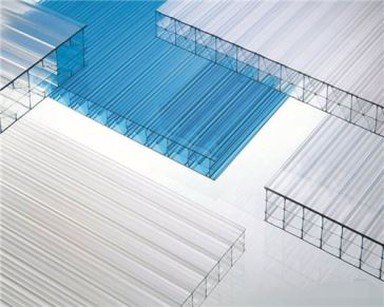
The history of PC board development
Jan 29, 2019
1. Since the late 1990s, the demand for PC boards in China has shifted from the original sand pipes used in the textile industry to the fields of electronics/electricity, optical discs, construction, and automobile industry. In 1999, the domestic consumption was about 140,000 tons. In 2003, the consumption increased to 380,000 tons, and the average annual growth rate was about 28%, which is much higher than the uniform growth rate of the national economy and the growth rate of other general engineering plastics. Because domestic production is extremely small, the PC boards used in China are mainly imported from abroad. From 1999 to 2003, the net import volume of PC boards in China was determined to be 138,000 tons, 235,000 tons, 212,000 tons, 342,000 tons, and 381,000 tons. It has not included a considerable number of PC boards that have been smuggled in, and has not thought about importing. Products and scraps, so the actual domestic import and consumption data is much more than the above-mentioned customs calculations. The international PC board industry unanimously believes that China's market potential is relatively large.
2. The current global PC board use has been carried out in the direction of high-utilization and specialization. In view of the rapid development of China's PC board production and market demand, especially the establishment of multiple sets of planned equipment in China, coupled with the rapid development of the automotive industry. Pulling forward, China's PC industry will enter a new stage of development in the next few years. PC boards are everywhere in life and production. The most widely used areas are as follows: construction, health care, electrical and electronic, automotive and sports equipment. These aspects have seriously affected our lives. So this has become an indispensable material for the development of our society. According to the development trend, the important position of PC board in various industries in the future should not be underestimated.
3. At present, the main materials used in modern greenhouse construction in China are glass and double-layer film. The main problem with modern greenhouses built with these materials is the high energy consumption of greenhouses. When encountering natural disasters such as hail and heavy snow, the ability to resist natural disasters is poor, the greenhouse itself is seriously damaged, and the crops grown in the greenhouse are also greatly damaged. White film will also cause white pollution after use. A double-layer and multi-layer solar panel that was introduced in Europe in the 1970s as a solar panel for the fourth generation of greenhouse covering materials. It has been widely used in agricultural greenhouse construction. Its important feature is light weight, its weight is one-fifth of the same thickness of glass; super strong: impact strength is 16 times that of glass; energy saving: more than 40% energy saving than glass cage greenhouse; durable: solar panel application 10 After the year, the light transmittance is reduced by no more than 10%; cold and heat resistant: between -40 °C and 120 °C, the solar panel does not deform; the transparent, colorless solar panel has a light transmittance of between 75% and 82%; Cold bendability: The minimum tortuous radius of a solar panel at room temperature is 175 times the thickness of the panel. Basically improved the state of the greenhouse.